Michael Boyd, President
Californians for Renewable Energy
(CARE)
821 Lakeknoll Drive
Sunnyvale, CA 94089
(408) 325-4690
STATE OF CALIFORNIA
State Energy Resources
Conservation and Development Commission
In the Matter of: )
) Docket No. 99- AFC-3
)
) Comments on the Preliminary
) Staff Assessment of the Metcalf
) Energy Center by K. Shawn
_________________________________ ) Smallwood, Ph.D.
June 30, 2000 Michael E. Boyd, President CARE
(p Proof of Service
Attached)
Comments
on the Preliminary Staff Assessment of the Metcalf Energy Center
K.
Shawn Smallwood, Ph.D.
I have reviewed the CEC Preliminary
Staff Assessment (PSA) of the Application for Certification 99-AFC-3, Metcalf
Energy Center. I applaud Linda Spiegel
for what appears to be a commendable effort to deal comprehensively with many
of the issues related to biological resources.
Many of her conclusions and recommendations appear sound, or at least
provide an excellent start for further investigation and analysis. There are some issues that remain for me,
however, and I would like to address these issues herein and in the Public
Workshop on Biological Resources to be held in San Jose on June 22, 2000. In addition, my work on this project is only
in its preliminary phase. I am sure
there will be a significant number of additional issues that will need to be
addressed, or addressed differently.
My qualifications for responding to the PSA are summarized
in my short biography and Curriculum Vitae, which area attached.
Environmental Setting
The reconnaissance-level biological
surveys at the proposed project site by CH2MHILL and CEC biologists appear to
be fairly thorough. However, there are
significant shortfalls. Some of them
are the absence of bat surveys, small mammal trapping, and use of camera
traps. I saw no evidence of netting or
acoustical sampling for bats. Since
multiple bat species are considered Species of Special Concern by our state and
federal governments, I regard this shortfall as significant. I also saw no attempt to sample the small
mammal species using traps, which severely constrains an understanding of which
species are present. I recommend that
proper sampling be implemented for bats and small mammals.
I want to point out a couple of findings I made at the site
during my visits of 11 April and 2 May, 2000.
My findings are significant because, as is typical with CEQA or
CEQA-equivalent document preparation and assessment, the biologists of the lead
agency are expected to limit their examination of any changes in existing
physical conditions in the affected area since they occurred at the time of the
notice of preparation (NOP). However,
this baseline may not be the appropriate one from a scientific, biological
standpoint, nor from the standpoint of maximizing environmental protection
while avoiding or minimizing environmental harm, which constitutes CEQA’s
foremost principle. Biologists are
familiar with natural changes in physical conditions and with periodic changes
in site occupancy by species (Taylor and Taylor 1979). That is, if a species appears absent from a
site at the time of the NOP, it could easily have been there prior to the NOP
and it could very well be there again in the near future so long as the site
supports suitable habitat. I want to
present certain of my findings that demonstrate the need for prudent caution in
determining which species exist at Tulare Hill, Fisher Creek and the adjacent
upland area (proposed MEC site).
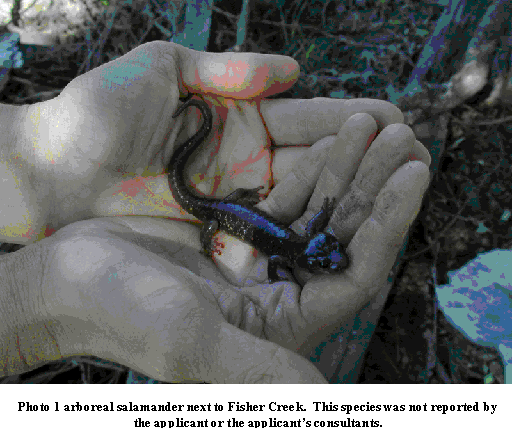
For example, I found an arboreal salamander on the west
side of Fisher Creek downhill from the large spring on Tulare Hill (Photo 1), a
western skink on the east side of Fisher Creek, a deer mouse on Tulare Hill,
western fence lizards, pocket gophers, Tree Swallows, and Western
Kingbirds. These species apparently
were not found by CH2MHILL (2000: Table B-1, page 9-3). These species have no special status under
California and federal laws and policies, but my finding them after other
biologists visited the site on numerous occasions demonstrates the frustrating
reality that animal species are always missed during site visits, no matter how
exhausting.
As another example, the PSA
concludes that California Horned Lizards are unlikely to occur on Tulare Hill
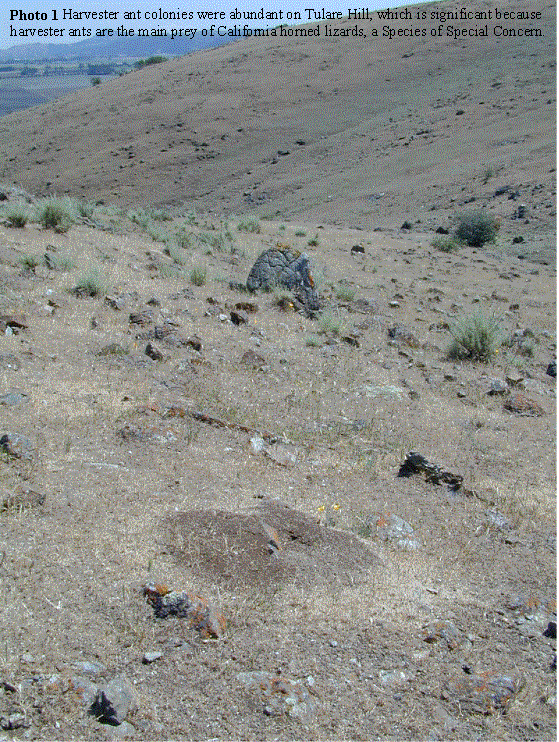
or the proposed project site, because the habitat is unsuitable. However, I found numerous harvester ant
colonies on Tulare Hill (Photo 2), and harvester ants are the major prey of
California Horned Lizards. I recommend
that the likelihood of California Horned Lizard presence be reconsidered, and I
recommend that some assessment be made of the possible impacts of NOx
deposition on harvester ants. The California Horned Lizard is a California
Species of Special Concern. To meet CEQA’s foremost principle, this type of
enhanced examination is absolutely essential.
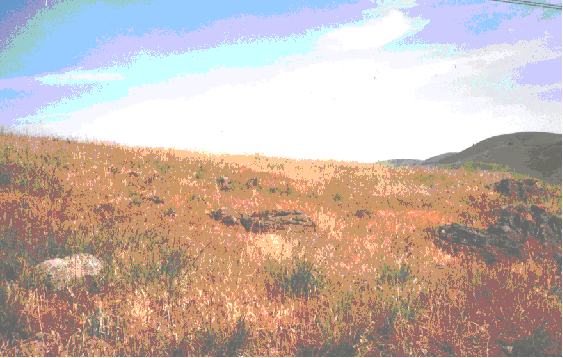
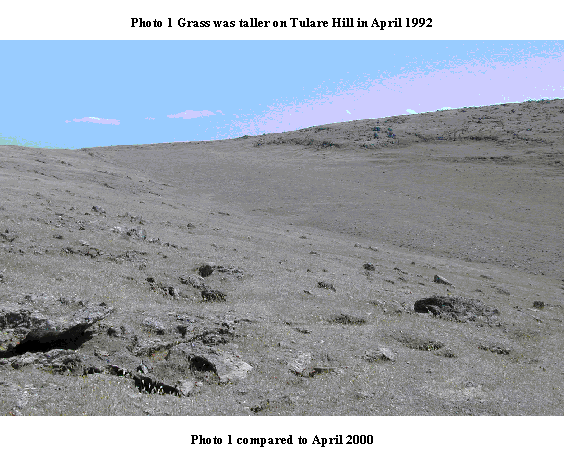
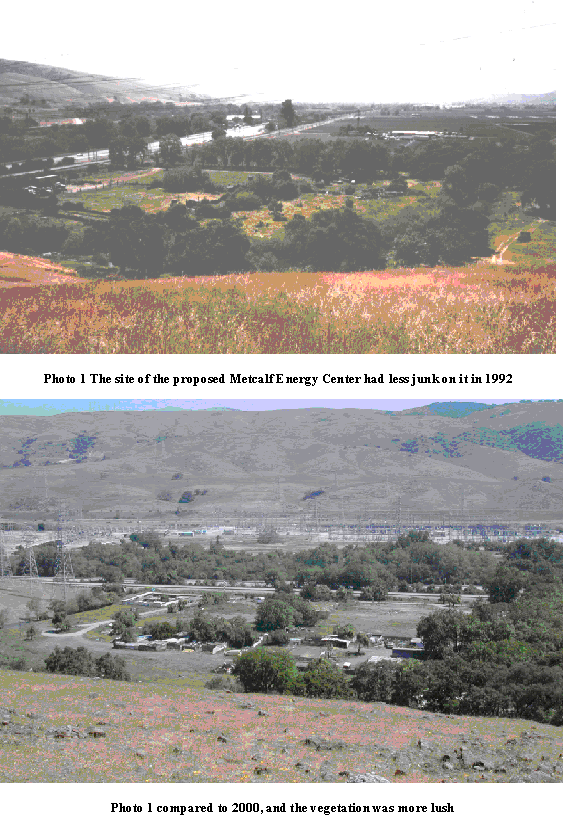
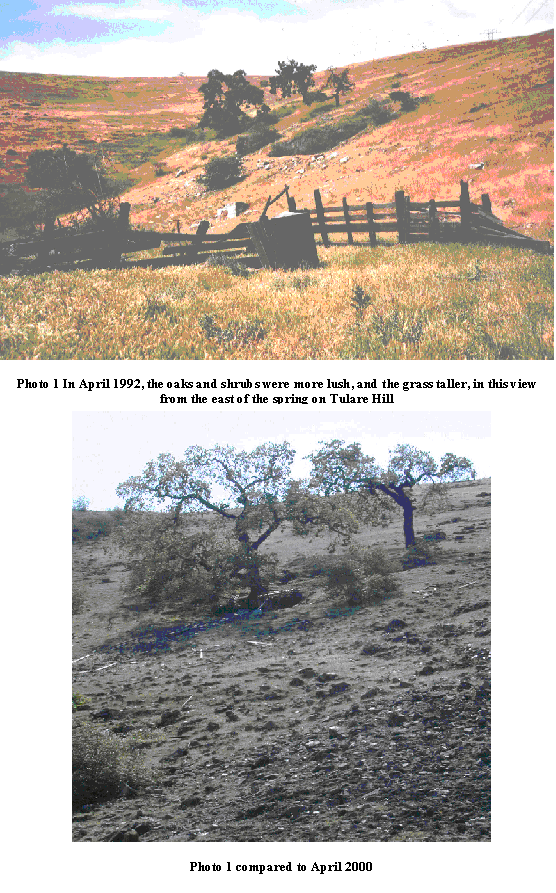
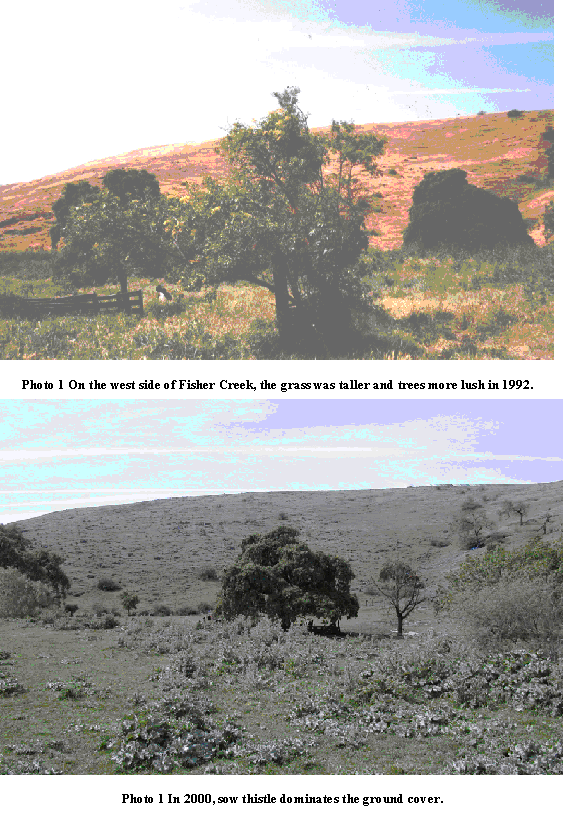
Also, I acquired photographs taken
by one of the former land holders during 1992.
These photographs of Tulare Hill and the upland area next to Fisher
Creek show that this site was not as degraded as it is today (Photos
3-10). The junk piles were not there as
they are today, and the vegetation was more lush on both Tulare Hill and the
upland area next to Fisher Creek. These
photographs were taken approximately the same time of year as my site visits,
so the vegetation conditions should have been comparable with respect to
phenology. The reduced plant height and
density on Tulare Hill might indicate an impact from atmospheric pollutants
since 1992, or part of a cyclic change in vegetation conditions with local
climate variables. Whatever the reason
for the apparent change in vegetation conditions, the biological species we see
there today might not compose the same assemblage of species that was there in
1992, and it might not be the same assemblage that will be there in 10 years
from now.
CH2MHILL prepared a summary of their
biological surveys, entitled “Biological assessment for the Metcalf Energy
Center Project, Santa Clara County, California.” Overall, this document was well prepared and served as useful
source material for Linda Spiegel’s PSA.
However, I found some problems with the CH2MHILL document. For example, California ground squirrels are
reported to occur primarily on the western bank of Fisher Creek (page 1-12),
and to not occur on the center portion of the site (page 2-11). This is not the case. Contrary to the claim made on page 2-11,
construction of the MEC will not avoid potential aestivation habitat for
California tiger salamander. California
ground squirrels occupy the entire upland area where the applicant proposes to
build Metcalf Energy Center, and these squirrels are abundant to the top of
Tulare Hill. The widespread
distribution of California ground squirrels is significant because their
burrows serve as habitat for California tiger salamanders and red-legged
frogs. In Table 1 (page 2-4), the
potential impacts to these two species are downplayed because the impacts avoid
aquatic habitat. Both the California
ground squirrel and the red-legged frog require
animal burrows, principally ground squirrel burrows, in upland areas away from
the aquatic environment of streams such as Fisher Creek. Contrary to the claim made on page 2-11,
construction of the MEC will not avoid potential aestivation habitat for
California tiger salamander.
The likelihood of red-legged frogs
occurring in Fisher Creek is downplayed on page 2-11 because bullfrogs occur
there. Bullfrogs do not necessarily
exclude red-legged frogs, even though they prey on tadpoles of red-legged
frogs. The minimization of the potential significance of impacts on
irreplaceable biological resources, whether intentional, accidental, or due to
institutional bias, violates the spirit as well as the letter of CEQA’s
foremost principle. To comply with
CEQA, this minimization must be avoided.
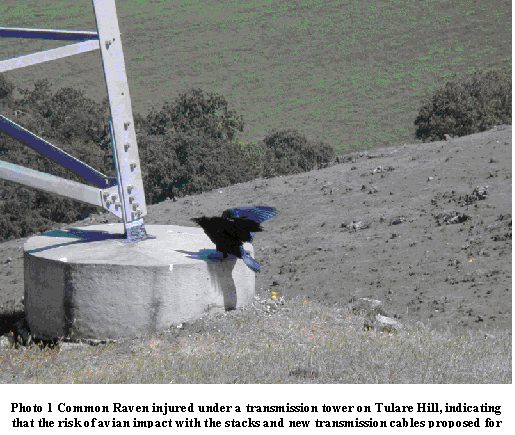
I disagree with the conclusion on page 4-4 that because the effluent stacks of the MEC would be below the elevation of Tulare Hill, and because transmission lines already exist in the area, migrating birds would be unlikely to collide with these stacks. This is a perfect example of the tendency to minimize the potential significance of the project’s impacts. It is also an example of going out of one’s way to come up with creative ideas to minimize that significance, which is directly opposite to the foremost principle of the CEQA statutory scheme. Under CEQA, it is far more appropriate to creatively ideate in the areas of thoroughness in assessing potential impacts and coming up with effective measures capable of avoiding or mitigating those impacts. For example, during my visit of May 2, 2000, I found an injured Common Raven at the base of one of the transmission towers on Tulare Hill (Photo 11). I draw the reasonable inference that this raven was injured by colliding with the tower or the wires. Just because this raven was removed from the candidate pool of birds that can collide with the MEC’s stacks does not preclude other individuals or other avian species from doing so. Manville (2000) and Hoving and Sealy (1987) report disturbing fatality rates due to avian collisions with tall, lit towers. I recommend that CH2MHILL not downplay the significant threat posed by MEC’s stacks to nocturnally migrating birds. I also recommend that the collision hazard be reduced to the extent possible and that it be factored into the formulation of mitigation.
Direct Impacts
At this early stage, I generally
agree with Linda Spiegel’s assessment of direct impacts, but I would add
impacts that include the following. The
power plant, laydown area, and access roads will destroy the ground squirrel
burrows there. CH2MHILL (2000) is
incorrect to conclude that this area is so disturbed by dogs that California
ground squirrels do not occur in abundance there. Again, this is another example of taking the wrong perspective
aimed at trivializing the severity of impacts, rather than maximizing
environmental protection, as CEQA requires.
California ground squirrels occupy the extent of the upland area at this
location. If California tiger
salamanders or red-legged frogs aestivate in those burrows, then they will be
destroyed as well, and their habitat will be taken.
Indirect
Impacts
At this early stage, I generally
agree with Linda Spiegel’s assessment, although I suspect, among other things,
that noise and light levels will be more disruptive to wildlife than has been
expected by the CH2MHILL and CEC biologists.
Artificial light levels can interfere with dispersal movements of
mammalian carnivores (Beier 1995), the mating-related singing behaviors of birds
(Derrickson 1988, Bergen and Abs 1997), the behavior of nocturnal frogs
(Buchanan 1993), the nocturnal emergence and foraging activity of salmonids
(Contor and Griffith 1995), the activities and predation risk of moths (Frank
1988, Rydell and Baagoe 1996), the congregatory behavior and distribution of
certain species such as American Crows (Gorenzel and Salmon 1995), the
orientation and mobility of nocturnal, non-volant insects such as ants (Klotz
and Reid 1993) and crawlers (Summers 1997), and all of these documented effects
are relevant to the environmental conditions at the proposed MEC site. Far more work is needed before CEQA’s
stringent standards are met.
Cumulative Impacts
I agree with Linda Spiegel’s
conclusion that the NOx emissions from
the proposed Metcalf Energy Center would create cumulative impacts to an
already stressed ecosystem. The fact
that the South Bay Area already exceeds federal air quality standards forces
the conclusion that any additional emissions of these pollutants would
exacerbate an already intolerable situation.
Therefore, under CEQA not only must these potential impacts be deemed
significant, but they must be carefully analyzed with regard to mitigation. I agree with Spiegel’s recommendation that
the applicant produce an cumulative impacts assessment. The cumulative impacts assessment performed
by CH2MHILL (2000: page 7-1) is entirely inadequate. An adequate cumulative impacts assessment is absolutely
essential, and failing to perform one would, in my opinion, violate CEQA. I also recommend that the applicant perform
this assessment according to the standards described by McCold and Holman
(1995). The preferred approach under
CEQ is an identifiable, quantitative as well as qualitative, or
performance-level assessment of a particular, potential environmental effect,
which I think would be appropriate for assessments of cumulative impacts, and
direct and indirect effects. Such
performance levels of environmental effect also need to be built into adaptive
management and monitoring (discussed below).
The estimated contours of NOx
deposition illustrate the areas of vulnerability of soil-vegetation complexes,
as well as their associated faunal assemblages. However, it would be more helpful if the applicant would overlay
these contours with a map depicting the various levels of sensitivity of
soil-grassland complexes to pollutants.
Such an overlay can be used to forecast spatially-explicit impacts, much
like Zhang et al. (1998) provided for excess nitrogen concentrations in ground
water. Zhang et al. (1998) compared the
spatial distribution of nitrogen inputs for agricultural crops to the spatial
distribution of soil leaching potential.
The inputs increasing the vulnerability of groundwater to nitrogen
contamination and the inherent attributes of the soils made them more or less
sensitive to such inputs. Zhang et al.
(1998) forecast impacts that closely matched the measured impacts (i.e.,
nitrogen concentration in ground water sampled from wellheads). CH2MHILL should have the spatial data,
software, and expertise to make such overlays and forecasts of impacts. CEQA requires nothing less. I recommend that this type of impact
analysis be performed for NOx deposition.
Mitigation
CEQA requires
the mitigation measure to be roughly
proportional to the project’s impacts.
Typically, proportional mitigation is estimated as a ratio of the area
to be taken to the area to be conserved.
The area of the MEC, laydown area, and access roads is easy to calculate
and it is easy to match with a conservation easement or fee title purchase of
similar habitat conditions elsewhere.
Not so easy to calculate is the roughly proportional mitigation for the
impacts of pollutants from stack emissions.
Which of the estimated contours of NOx deposition should the CEC use to
determine the roughly proportional area that needs to be conserved as
mitigation? I recommend that, given the
uncertainty of impacts, the entire area projected to receive NOx deposition
should be considered when determining a roughly proportional mitigation. From the standpoint of maximizing
environmental protection, and avoiding and minimizing environmental harm, this
is the safest approach and thus the one that CEQA requires.
One of the
mitigation options proposed by the applicant is to invest in a regional Habitat
Conservation Plan (HCP). In so doing,
the applicant defers the formulation of this portion of the mitigation to a
later date when an HCP might be prepared. Under CEQA, the EIR should justify
the choice of a particular mitigation measure, and with few exceptions it is
improper to defer formulation of the mitigation to a later date. The mitigation measures need to be described
explicitly and thoroughly in the EIR, along with the alternatives that were not
chosen and an explanation as to why they were not chosen. The same should be done in the applicant’s
planning documents, in this case.
Additionally, HCPs are mitigation plans that facilitate the
takings of endangered species more quickly and over larger areas than otherwise
would be possible (Shilling 1997, Smallwood 2000, Smallwood et al. 1999). The applicant essentially would be investing
in a vehicle to foster more land conversions to houses and commercial uses. An HCP would enable project proponents to
destroy an even greater area of habitat than otherwise would occur. These land conversions would increase demand
for electrical energy, and might possibly benefit Calpine-Bechtel. Therefore, I view this proposed mitigation
as self-serving on the part of the applicant, but detrimental to the
conservation of endangered and other species in the San Jose area. This is simply not allowed under CEQA, and
the failure to correct this glaring deficiency will surely expose the
environmental documentation to a successful legal challenge based on the EIR’s
inadequacy.
Adaptive Management
The applicant proposes to implement
adaptive management based on habitat responses to cattle grazing on Tulare
Hill. I encourage the CEC staff to
demand more details of explicitly what this adaptive management would
entail. Based on my professional
experience, many project proponents have been proposing adaptive management
strategies, without a proper understanding of what an adaptive management
strategy entails. Adaptive management
has been addressed in over 80 scientific publications, including several key
papers and books (Holling 1978, Walters 1986, Lancia et al. 1996, McLain and
Lee 1996). This literature describes a
well thought-out step-by-step approach to learning about a managed environment
while also provisioning the manager(s) with options to adopt alternative
management practices. Management
prescriptions, hypothesized environmental effects, and alternative management
prescriptions are all specified prior to implementation. Many project proponents appear to think of
adaptive management as a remedial, trial-and-error approach to problem-solving
(see also CH2MHILL 2000: page 5-8). I encourage
the CEC staff to determine whether the applicant really understands adaptive
management. To be certain that the
applicant does understand it, it should be described in detail in the
application documents, along with the details of an integrated monitoring
program.
Monitoring
Spiegel recommended that
Calpine-Bechtel invest in an endowment fund to manage Tulare Hill in
perpetuity, rather than settle for their proposed 30-year monitoring of
impacts. However, if the NOx
deposition, or some other contaminant borne in the stack effluent, destroys the
existing ecological relationships of Tulare Hill, then an endowment to manage
Tulare Hill in perpetuity may be badly spent in perpetuity. I encourage the CEC to consider recommending
a more rigorously described monitoring program to ensure that we learn about
the impacts of such an energy facility on the ecological community that is
adapted to serpentine soils. We also
need to learn about the impacts of the 145-foot-tall stacks. Monitoring their impacts on birds for three
years will not be helpful if it turns out that intolerable numbers of migrating
birds are colliding with the stacks.
Something would need to be done about it (see my discussions of Adaptive
Management and Changed Circumstances).
Spiegel points out that serpentine-based rock represents 1%
of California’s geologic base, yet contains 10% of California’s floral
species. The proposed Metcalf Energy
Center is unique among energy
facilities permitted by CEC in that it poses impacts to this
serpentine-grassland complex that supports 10 times the average floral species richness
across the other 99% of California. This proposed facility would also be unique
for threatening the contiguity of habitat between the serpentine soils of the
Santa Cruz Mountains and the Diablo Range.
Tulare Hill is recognized as the site of a satellite population of Bay
Checkerspot Butterfly (USFWS 1998), so its degradation as habitat would
contribute to habitat fragmentation of Bay Checkerspot Butterfly (Wilcox and
Murphy 1985, Weiss cf in CH2MHILL 2000).
This is a serious problem, of which CEQA requires careful, in-depth
analysis. Much more work is needed to
meet CEQA standards.
Given the lack of empirically based knowledge on NOx and
other pollutants on serpentine-based communities, it would be especially
prudent, in accordance with CEQA’s high standards, to establish a
scientifically defensible monitoring program, including out-of-area control
sites and both an impact-gradient design and before/after-control/impact (BACI)
pairs design. In other words, I
recommend that distance to source be factored into the sampling design, as well
as before and after sampling at both Tulare Hill and the control sites. Without these types of designs, the
monitoring program will be pseudoreplicated and unlikely to be informative
(Hurlbert 1984). Data collected in an
adequate monitoring program would likely include the following variables:
·
Nitrogen deposition rates
·
Soil chemistry
·
Biological species
composition
·
Plant biomass
·
Plant height
·
Plant density
·
Root depth
·
Incidence of disease
·
Numerical distributions of
dependent fauna, including Bay Checkerspot Butterfly and Opler’s Longhorn Moth.
Additional
variables would likely also be important, but they all need to be identified
and described now, not later. These
variables would also need to be collected at elevations spanning the bottom to
top of Tulare Hill and at locations spanning the north-south breadth of the
Hill. This design would need to be
repeated on the comparison, control sites.
This type of a rigorous sampling design would cost more than $30,000/year. Outside (non Calpine-Bechtel) employees
should conduct the monitoring work.
CEC Staff Proposed
Mitigation
I recommend that staff consider a 1:1 conservation-to-take
ratio of the upland area to be converted to the power plant, laydown area and
access roads. This area may be
disturbed, but upland areas next to water channels, disturbed or not, are
important dispersal areas for wildlife.
This upland area could be used for aestivation and dispersal by
California tiger salamander and red-legged frog. Another nearby upland area that is adjacent to a stream should be
conserved in equal area and in perpetuity (or until the hydrological system has
changed locations and relief).
Similar to the recommended endowment
fund, I recommend that the CEC require a fund to be available for changed circumstances. Alternative management strategies might be
needed to mitigate the impacts of NOx depositions onto Tulare Hill. For example, if exotic weeds colonize Tulare
Hill in response to nitrogen augmentation, then Calpine-Bechtel might need to
perform weed management in support of the food plants of Bay Checkerspot
Butterfly and Opler’s Longhorn Moth. In
another example, if the MEC’s stacks cause an intolerable number of migratory
bird collisions, then additional mitigation would be needed, or changes to the
stacks might be needed.
Conclusions
Although it is far too early for any final conclusions,
generally speaking we have gotten off to a good start in this preliminary
phase. But a lot more hard, thorough,
and unbiased (or biased in favor of the environment) work is necessary.
Tables 1 and 2 summarize my comments
and recommendations on this Preliminary Staff Assessment and on the applicant’s
documents.
 6-29-00
__________________________________ ______________
Shawn
Smallwood, Ph.D. Date
Table 1. Status of PSA, and some of the consequence of existing shortfalls.
|
Defect of PSA and applicant documents |
Evidence |
Consequence |
|
1. Biological surveys are incomplete |
No sampling methods were described for bats and small, non-volant mammals |
The environmental setting remains incompletely described, thus the project impacts remain incompletely described |
|
2. Baseline environmental conditions are too recent and narrowly described |
Photos of the site from 1992 depict a more lush vegetation on Tulare Hill and the MEC site; I found species that CH2MHILL and CEC biologists did not find |
The environmental setting remains incompletely described, and the impacts are assumed smaller than they will really be |
|
3. The numerical/spatial distribution of ground squirrels was inaccurately described |
Contrary to CH2MHIlLL (2000), I saw ground squirrels across the upland area and the extent of Tulare Hill |
Ground squirrels are keystone species, and their burrows are used by California red-legged frog and California tiger salamander. Therefore, the PSA underestimates potential impacts |
|
4. The likelihood of California red-legged frogs occurring in Fisher Creek is underestimated |
Ample scientific reports exist that refute the claim of CH2MHILL (2000) that the presence of bullfrogs negates the presence of California red-legged frogs |
The PSA and supporting applicant documents downplay the potential of red-legged frogs to occur at this site |
|
5. The hazards of the MEC stacks and new power lines to birds are underestimated |
During one of two site visits I found an injured Common Raven under a transmission tower; Scientific reports are available to refute the claim that the stacks and transmission lines will not be a hazard because they will be below the highest elevation of Tulare Hill |
The impacts to nocturnally migratory birds are downplayed and trivialized |
|
6. Indirect impacts are inadequately assessed |
The effects of increased lighting and noise are mentioned, but the scientific evidence of their relative effects are is not |
The impacts of increased lighting and noise are downplayed and underestimated |
|
7. Cumulative impacts are inadequately assessed |
The standards of McCold and Holman (1995) and Smallwood et al. (1999) were unmet |
Cumulative impacts are downplayed and underestimated |
|
8. The mitigation measures are misdirected and will be ineffective |
The upland area next to Fisher Creek is not included in the conservation-to-take ratio, nor is the entire area of NOx deposition; HCPs are mitigation plans for take permits and defer formulation of mitigation measures to a later date |
The types of land being conserved do not match the lands being effected; Funding an HCP promotes more environmental impacts |
|
9. Adaptive management is improperly described |
>80 scientific publications describe adaptive management as a structured process designed to enable learning of manipulated environments, and to respond with planned alternative prescriptions; Adaptive management described by the applicant appears to be remedial trial-and-error |
The applicant’s plan will not enlighten the CEC about the effects of cattle management on Tulare Hill, so appropriate alternative management strategies will be unlikely applied |
|
10. The proposed monitoring plan is inadequate |
The applicant describes no design attributes of the monitoring |
Little will be learned from the monitoring and the lack of thresholds of significance will likely preclude any remedial actions to disturbing trends |
|
|
|
|
Table 2. My recommendations for amending the PSA and applicant documents prior to approval of the MEC.
|
Issue |
Recommendation |
|
1 |
Proper sampling methods should be implemented for bats and small, non-volant mammals, and at the appropriate spatial and temporal scales |
|
2 |
The regional and temporal context of the site needs to be described more thoroughly and realistically, including the inter-annual cyclicity of the weather patterns, the likely former biological occupants of the site, and the possible future occupants after the site use is changed |
|
3 |
Ground squirrel burrows should be counted and mapped, and a burrow probe used to view the interiors for special status species during repeat visits |
|
4 |
The literature on California red-legged frogs and California tiger salamander should be reviewed for the impacts of bullfrogs on these species, and agency-protocol surveys should be made of Fisher Creek on site and up- and down-stream of the site |
|
5 |
Monitoring of the avian impacts of existing power lines, maintained by PG&E, should be implemented immediately, or existing monitoring data examined (if they exist); The literature and experts on avian impacts with tall structures should be consulted and a more realistic impact assessment conducted; A reasonable mitigation plan should be formulated |
|
6 |
The scientific literature on artificial noise and lighting should be thoroughly reviewed, and indirect impacts assessment conducted, and a reasonable mitigation plan formulated |
|
7 |
A cumulative impacts assessment is needed, and should meet the standards of McCold and Holman (1995) and Smallwood et al. (1999); The ecological indicators approach would be appropriate to assess the likely areas of impact from NOx deposition (see Zhang et al. 1998) |
|
8 |
The proposal to fund an HCP as mitigation for this project should be rejected; An endowment fund should be established for long-term, scientifically defensible monitoring, as well as changed circumstances; Real adaptive management should be formulated and implemented; Conservation-to-take ratios should factor in the entire area of NOx deposition, as well as the type of physiography converted to the MEC |
|
9 |
The scientific literature on adaptive management should be reviewed, and a real adaptive management plan formulated for cattle management on Tulare Hill |
|
10 |
A detailed monitoring plan should be described prior to project approval, and should include attributes of impact-gradient design and before/after-control/impact (BACI) pairs, detailed descriptions of variables to be measured, out-of-area control sites, identification of who will conduct the monitoring (qualified expert[s] not employed by Calpine-Bechtel), thresholds of significance for making management adjustments, and integration into a well-described adaptive management plan |
|
|
|
References
Beier, P. 1995. Dispersal of juvenile cougars in fragmented habitat. Journal of Wildlife Management 59:228237.
Bergen, F. and M. Abs. 1997. Etho-ecological study of the singing activity of the blue tit (Parus caeruleus), great tit (Parus major) and chaffinch (Fringilla coelebs). Journal fuer Ornithologie 138:451467.
Buchanan, B. W. 1993. Effects of enhanced lighting on the behaviour of nocturnal frogs. Animal Behaviour 45: 893899.
CH2MHILL. 2000. Biological assessment for the Metcalf Energy Center Project, Santa Clara County, California. Calpine Corporation and Bechtel Enterprises Holdings, Inc., Pleasonton, California.
Contor, C. R. and J. S. Griffith 1995. Nocturnal emergence of juvenile rainbow trout from winter concealment relative to light intensity. Hydrobiologia 299: 179-183.
Derrickson, K. C. 1988. Variation in repertoire presentation in northern mockingbirds. Condor 90: 592606.
Frank, K. D. 1988. Impact of outdoor lighting on moths: An assessment. Journal of the Lepidopterists' Society 42: 63-93.
Gorenzel, W. P. and T. P. Salmon. 1995. Characteristics of American Crow urban roosts in California. Journal of Wildlife Management 59: 638645.
Holling, C. S. (ed.). 1978. Adaptive environmental assessment and management. John Wiley & Sons, New York.
Hoving, E. J. and S. G. Sealy. 1987. Species and age composition of a sample of birds killed in Fall 1979 at a Manitoba [Canada] TV tower. Prairie Naturalist 19: 129-134.
Hurlbert, S.H. 1984. Pseudoreplication and the design of ecological field experiments. Ecological Monographs 54:187-211.
Klotz, J. H. and B. L. Reid. 1993. Nocturnal orientation in the black carpenter ant Camponotus pennsylvanicus Degeer (Hymenoptera: Formicidae). Insectes Sociaux 40: 95106.
Lancia, R.A., C.E. Braun, M.W. Collopy, R.D.
Dueser, J.G. Kie, C.J. Martinka, J.D. Nichols, T.D. Nudds, W.R. Porath, and
N.G. Tilghman. 1996. ARM! For the future: adaptive resource
management in the wildlife profession.
Wildlife Society Bulletin 24:436-442.
Manville, A.M., II. 2000. The ABCs of
avoiding bird collisions at communication towers: the next steps. Proceedings of the Avian Interactions
Workshop, December 2, 1999, Charleston, SC.
Electric Power Research Institute (EPRI), Palo Alto, California.
McCold, L., and J. Holman. 1995. Cumulative impacts in environmental assessments: how well are they considered? The Environmental Professional 17:2-8.
McLain, R.J. and R.G. Lee. 1996. Adaptive management: promises and pitfalls. Environmental Management 20:437-442.
Rydell, J. and H. J. Baagoe. 1996. Street lamps increase bat predation on moths. Entomologisk Tidskrift 117: 129135.
Shilling, F.
1997. Do Habitat Conservation
Plans protect Endangered species?
Science 276:1662-1663.
Smallwood, K.S. 2000. A crosswalk from the Endangered Species Act to the HCP Handbook and real HCPs. Environmental Management 26, Supplement 1:23-35.
Smallwood, K.S., J. Beyea, and M. Morrison. 1999. Using the best scientific data for endangered species conservation. Environmental Management 24:421-435.
Summers, C. G. 1997. Phototactic behavior of Bemisia argentifolii (Homoptera: Aleyrodidae) crawlers. Annals of the Entomological Society of America 90:372-379.
Taylor, R.A.J. and L.R. Taylor. 1979. A behavioral model for the evolution of spatial dynamics. Pages 1-28 in R.M. Anderson, B.D. Turner, and L.R. Taylor (eds.) Population dynamics. Blackwell Scientific Publications, Oxford, U.K.
USFWS (United States Fish and Wildlife Service). 1998. Draft Recovery Plan for serpentine soil species of the San Francisco Bay Area. Sacramento, California.
Walters, C.J. 1986. Adaptive management of renewable resources. McGraw-Hill, New York.
Wilcox, B.A., and D.D. Murphy. 1985. Conservation strategy: the effects of fragmentation on extinction. American Naturalist 125:879-887.
Zhang, M., S. Geng, and K.S. Smallwood. 1998. Nitrate contamination in groundwater of Tulare County, California. Ambio 74:170-174.
Short Biography of
Shawn Smallwood, Ph.D.
Dr. Shawn Smallwood is an ecologist with 15 years of professional experience with wildlife, ecosystems, and endangered species issues. He has authored 73 publications, more than half of which were peer-reviewed. He has served as Associate Editor and Editorial Board Member of two international scientific journals, and he has reviewed many professional papers. Dr. Smallwood understands what it takes to produce scientifically defensible research, survey and monitoring results, as well as impacts assessments.
Dr. Smallwood’s work has focused on both endangered species conservation and animal damage control. He has worked to conserve such state or federally threatened species as red-legged frogs, giant garter snakes, Swainson’s Hawks, and Northern Goshawks. He has also developed lethal and non-lethal methods to control pocket gophers and many other species. Since 1985, he has also conducted the California track count for monitoring the statewide numerical and spatial trends of mountain lions, bobcats, coyotes, gray fox, black bear, and other mammalian Carnivores, as well as for deer. Dr. Smallwood also developed quantitative methods to identify individual animals by their tracks, and he developed new monitoring and counting methods for pocket gophers and other fossorial animals. He developed a new quantitative measure of treatment effect for use in animal damage control efforts. He also conducted his Ph.D. thesis research on exotic species, particularly those that species of mammals and birds that invaded California and caused economic or environmental damage.
Dr. Smallwood also applies the tenets of landscape ecology to his work, and develops ecological indicators for use with GIS. Dr. Smallwood has integrated GPS into his field studies, and has developed new statistical procedures for analyzing spatial data. Dr. Smallwood is also one of the world’s leading experts on animal density and spatial patterns of distribution, and he has an extensive collection of density and numerical estimates published for many species of mammal, bird, reptile and amphibian. He uses these estimates to predict patterns of spatial distribution for species with which he works in the field, and he uses them to interpret patterns observed in his field work. Dr. Smallwood also works on operationalizing the habitat concept, and focuses research on how to accurately quantify the selection and use of habitat by animal species.
Much of Dr. Smallwood’s consulting work has centered on assessing the foundation of conclusions in environmental documents prepared by project proponents and their consultants. He works to protect the interests of stake-holder groups by assessing the impacts of completed, ongoing and proposed projects and he assesses the adequacy of related environmental documents. He has served as an expert witness in litigation against the nuclear weapons industry and the chemical manufacturing industry, as well as against ocean floor dredging and an airport expansion, for example. Dr. Smallwood has written numerous expert reports, declarations, and depositions, and has testified often before attorneys, City Councils, County Supervisors and other governmental bodies.